
Empty walls in older houses
Wall Insulation in Lincoln, NE
Fill hollow exterior walls without tearing off the plaster, or foam open studs during a remodel.
- Free on-site estimates
- Written quote with material, thickness and R-value for each area
- Air leaks and moisture checked before anything gets covered
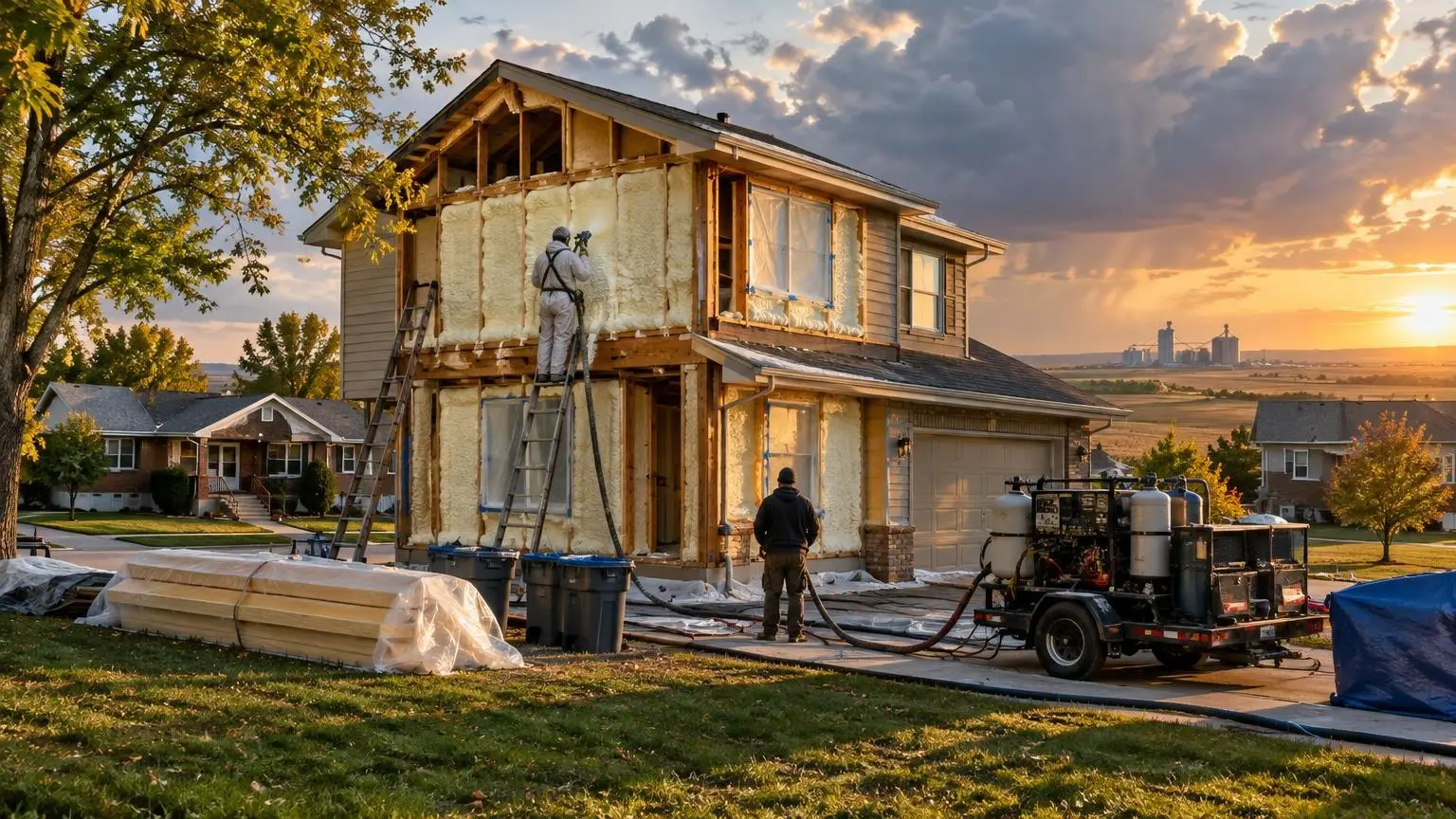
Hollow Walls Are Common in Older Lincoln Homes
Wall insulation is the upgrade most older Lincoln houses are missing. Homes in neighborhoods that were once their own towns, like Havelock, College View, University Place and Bethany Heights, were largely built before insulating walls was routine, and many still have nothing between the plaster and the siding. You can often feel it: exterior walls that are cold to the touch in January, rooms on the north side that never warm up, and outlets on outside walls that leak a draft.
Two ways to insulate a wall
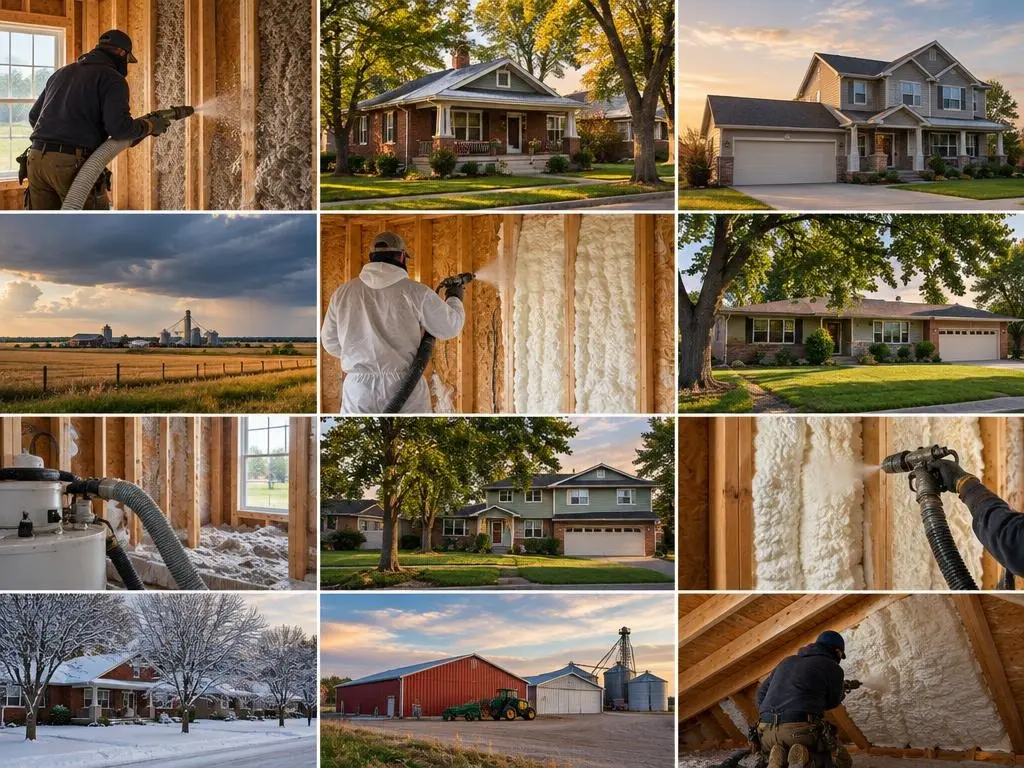
Finished walls. If the drywall or plaster stays, we drill small holes, usually from outside under the siding or from inside along a line that is easy to patch, and fill each cavity. Dense-pack cellulose is blown in tightly enough that it will not settle and also slows air movement. Injection foam is another option for some walls. Either way, every bay is checked so the blocking and fire stops do not leave empty pockets.
Open walls. During a remodel, addition or gut job, open stud bays can be sprayed with foam or filled with batts or blown fiberglass before drywall. Nebraska's 2018 IECC lists R-20 cavity, or R-13 cavity plus R-5 continuous, for wood-frame walls in new work.
The LES wall incentive
LES lists the larger of its two 2026 insulation incentives for walls: $0.80 per square foot of exterior frame wall, inside a $1,500 per-property cap and not more than half the project price. It applies to existing, occupied homes in the LES service territory that have no wall insulation now. The walls must reach at least R-13, blower door tests are required before and after, and the project must be pre-authorized before it starts. If the attic is under R-38, LES requires it be brought to R-49 as part of a wall project. Basement concrete walls and garage walls do not qualify.
Before we fill a wall
We check what is in the walls first. Knob-and-tube wiring that is still live should be evaluated by an electrician before any insulation goes around it. Signs of water from leaky windows or siding need to be fixed. And we confirm which walls are truly empty, since some houses had a partial retrofit decades ago.
Spray foam insulation cost for walls
National guides put foam in all exterior walls at $4,000 to $10,000 (HomeGuide) and blown-in for walls at $1.10 to $3.70 per square foot (HomeGuide). See the table below for the full ranges.
Get a free estimate or call (402) 795-8689.
Wall Work We Do
Finished walls, open walls and the details around them.
Dense-pack cellulose
Blown into closed cavities through small holes at high density so it fills the bay and does not settle.
Injection foam
A foam made for closed cavities, used in some finished walls where it suits the construction.
Open-stud spray foam
Closed- or open-cell foam sprayed in during remodels, additions and new construction.
Hole patching
Holes plugged and patched, or drilled behind siding that goes back on.
Infrared check
A thermal scan where conditions allow to spot bays that were missed.
Typical Wall Insulation Costs
| Job | Range and source |
|---|---|
| Spray foam, all exterior walls | $4,000 to $10,000 (HomeGuide) |
| Spray foam, existing walls | $3.15 to $7.50 per sq ft (Fixr) |
| Spray foam, new construction | $2.75 to $6.50 per sq ft (Fixr) |
| Blown-in, exterior walls | $1,900 to $7,800, $1.10 to $3.70 per sq ft (HomeGuide); $2,000 to $4,000 (Fixr) |
| Dense-pack cellulose | $1.60 to $4.20 per sq ft (HomeGuide) |
These are national ranges from HomeGuide (2025 and 2026 guides) and Fixr (2025). Wall height, siding type, the number of bays and patching change the price. Your written estimate is the figure you are billed.
How a Wall Job Works
1. Check the walls
Find empty bays, confirm wiring and look for water damage.
2. Quote and paperwork
Written price per wall area, and LES pre-authorization if your home looks eligible.
3. Drill and fill
Each bay filled to density, with blocking checked so no pockets are skipped.
4. Patch and verify
Holes closed and the walls checked for missed spots.
Why Choose Us for Wall Insulation
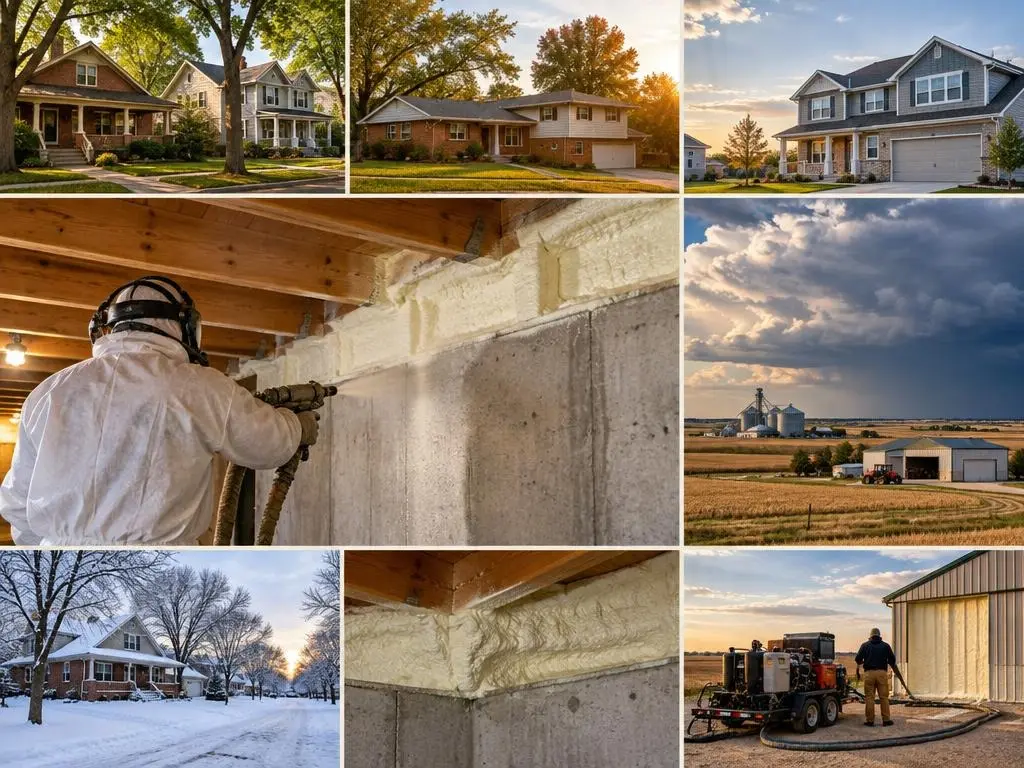
Every bay accounted for
We map the wall so fire blocking and windows do not leave empty pockets.
Wiring checked first
We flag old wiring before anything goes into the wall.
Wall Insulation Questions
Can you insulate walls without removing drywall or plaster?
Yes. Dense-pack cellulose or injection foam goes in through small holes, from inside or from outside behind the siding. The holes are plugged and patched afterward.
How do I know if my walls are empty?
Remove an outlet cover on an exterior wall with the power off and look beside the box, or we can check during the visit. A cold wall surface in winter is another strong clue.
Does LES pay for wall insulation?
LES lists $0.80 per square foot for qualifying exterior frame walls in 2026, with a $1,500 cap per property. The home must have no wall insulation now, the walls must reach R-13, and pre-authorization plus blower door tests are required.
Is spray foam or cellulose better for old walls?
For closed walls, dense-pack cellulose is the most common choice because it fills irregular cavities well. Standard spray foam is for open walls during a remodel. We recommend based on how your walls are built.
Wall Insulation Service Areas
- Spray Foam Insulation in Lincoln, NE
- Spray Foam Insulation in Waverly, NE
- Spray Foam Insulation in Hickman, NE
- Spray Foam Insulation in Bennet, NE
- Spray Foam Insulation in Firth, NE
- Spray Foam Insulation in Malcolm, NE
- Spray Foam Insulation in Eagle, NE
- Spray Foam Insulation in Crete, NE
- Spray Foam Insulation in Milford, NE
- Spray Foam Insulation in Seward, NE
- Spray Foam Insulation in Ashland, NE
- Spray Foam Insulation in Wahoo, NE
- Spray Foam Insulation in Beatrice, NE
Get a Wall Insulation Estimate
Tell us roughly when the house was built and which rooms feel cold. We will check the walls and quote the fill.